In a corporate building, the facade is not the hard part
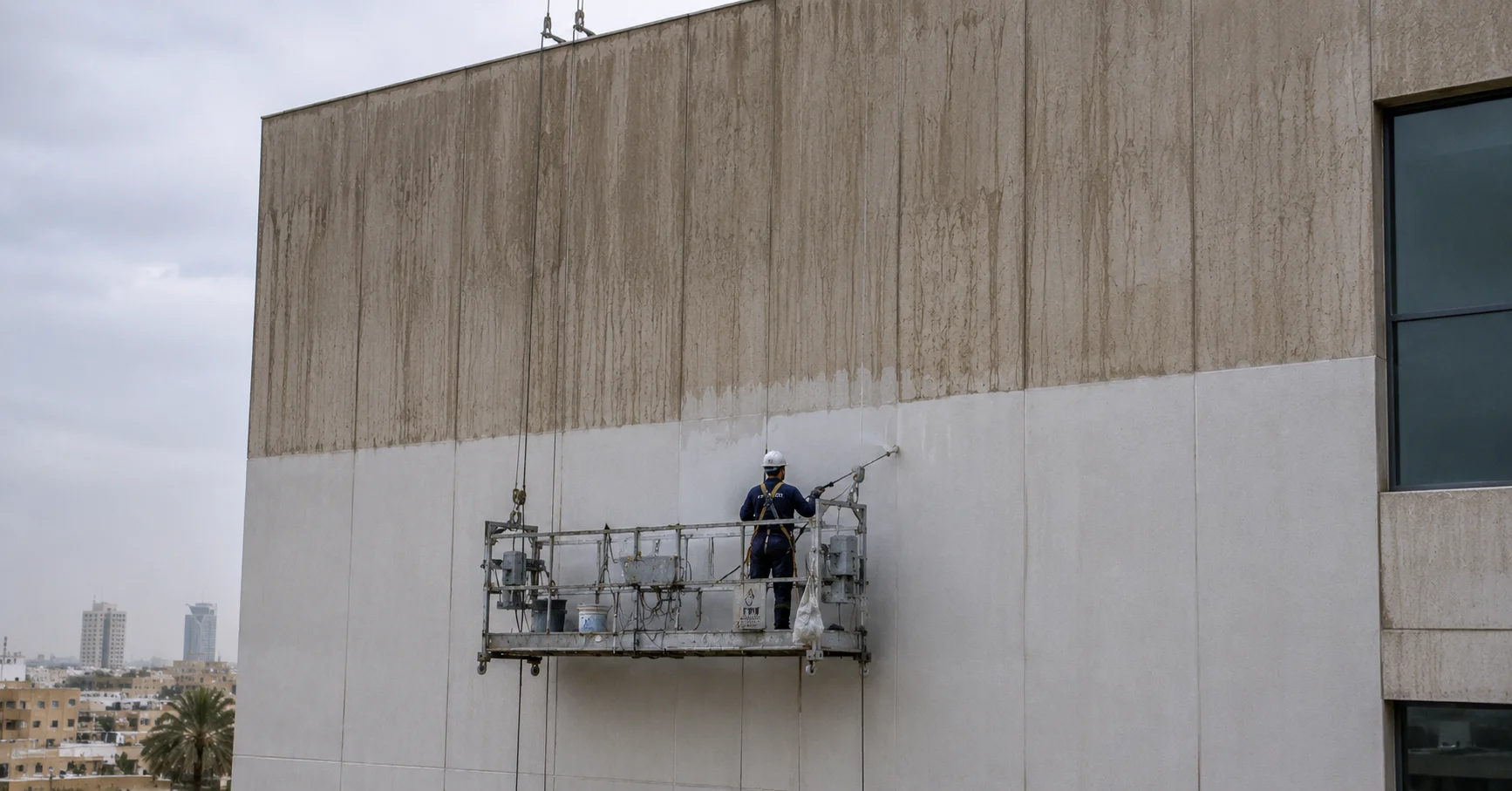
On an office building, cleaning the facade itself is rarely the difficulty. Everything around it is: who authorises access, when work can run without disrupting staff, where equipment can stand without closing parking, and who must be told before it starts.
So what makes a facade contractor suitable for a corporate site is not their equipment. It is their ability to work inside an existing system.
Coordination with facility management
Facility management carries concerns that have nothing to do with cleaning: access permits, staff safety, parking allocations, and other works already booked in the building.
We work to a schedule agreed with facility management, and coordinate access, parking and entrances in advance. That coordination happens before the visit, not on the morning of it.
Working outside office hours
Where required, we work outside office hours. An office building has a clear rhythm: arrival in the morning, departure in the evening, and meetings in between.
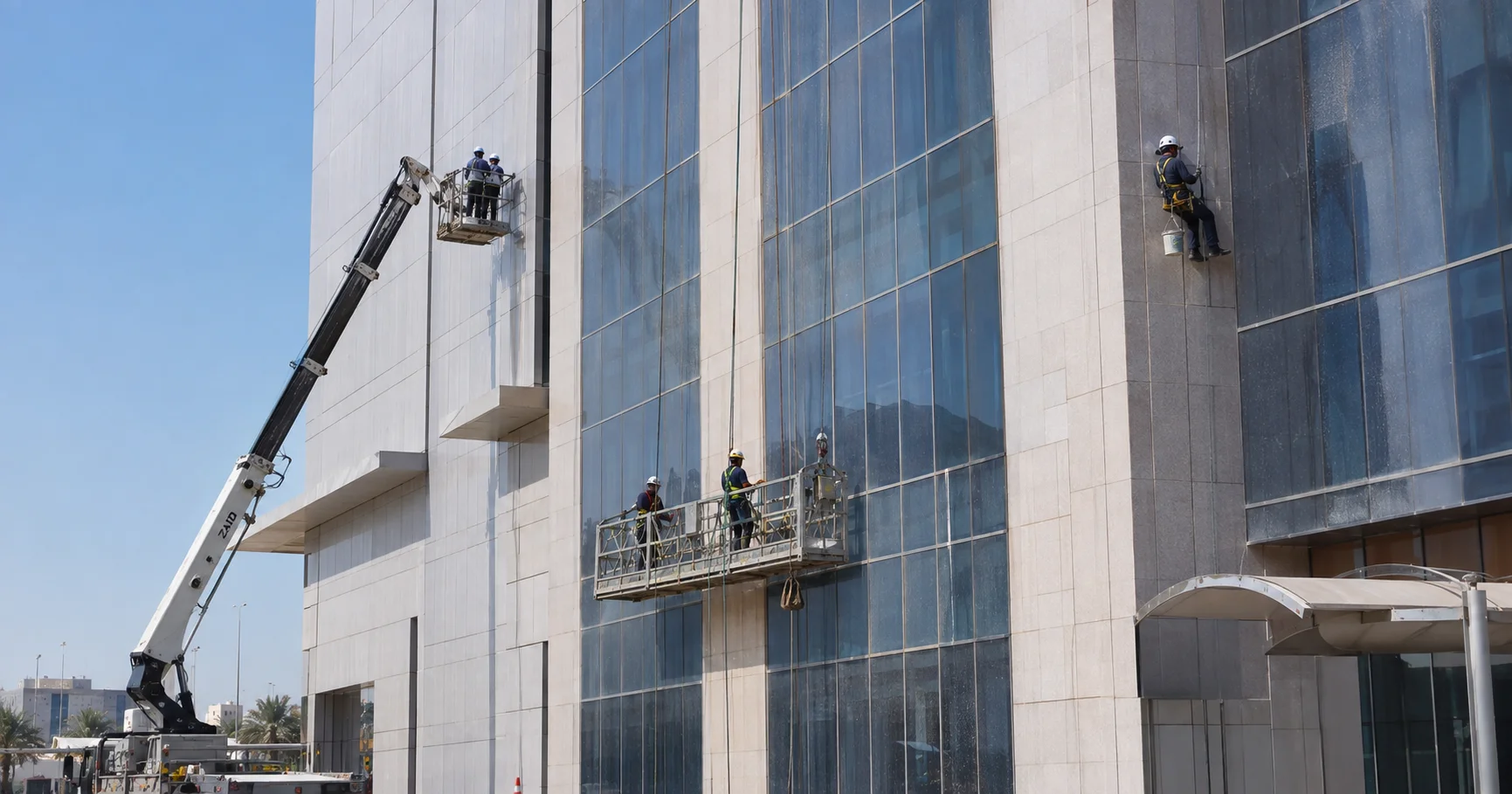
Working on the elevation during those windows means movement at the entrance and equipment in staff circulation routes. Running it outside them removes the problem entirely.
Multi-site: the real challenge is consistency
A company running several sites faces a different problem from a single-building owner: consistency.
When one branch is cleaned by one contractor and another by a second, the differences show — different standards, different schedules, different scope. The result is that the same brand appears at different levels depending on the district.
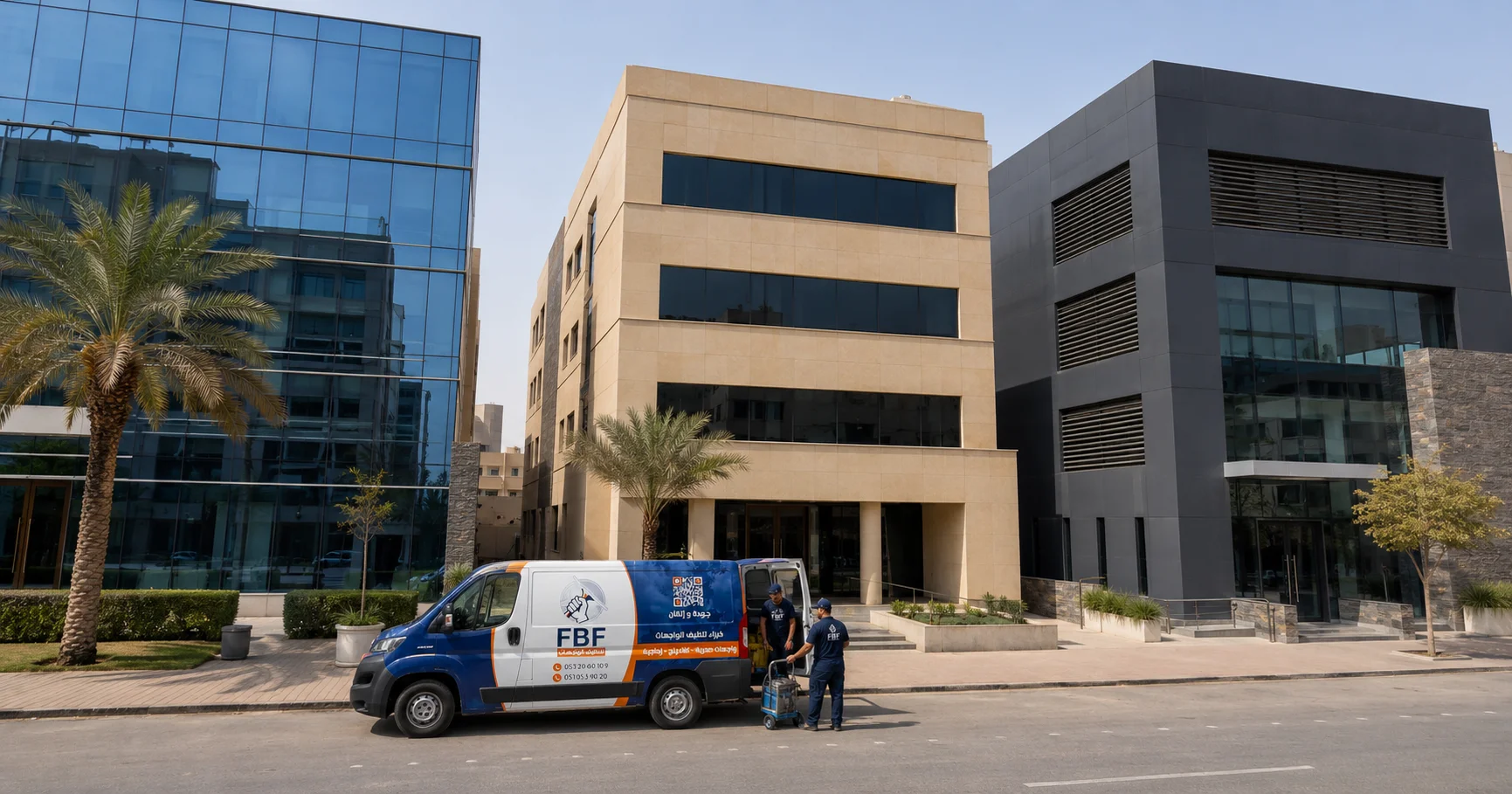
We serve shops and offices with the same methods and the same crew. The difference between a small branch and a headquarters is scope and frequency, not the standard applied.
That is not a theoretical claim. Our published work includes a branch of a multi-site brand alongside independent single-unit shops — all executed with the same approach and the same standards.
Recurring contracts are not only for corporates
A point often misread: maintenance contracts are available across all sectors, not only to companies. Shops and restaurants, villas and homes, and corporate offices can all sit on one.
But headquarters and multi-site operators benefit most in practice, for a simple reason: the number of locations. Tracking one site manually is possible; tracking several on separate schedules quickly becomes an administrative burden.
A recurring contract solves that with a fixed schedule, a price agreed in advance, and priority on appointments.
A report after every visit
After each visit we provide a report of the scope completed. On a single building that is useful information. Across a multi-site operator it is a management tool.
The report answers the question facility management otherwise struggles to answer: what was done, exactly, where, and when? It makes branches comparable without visiting each one.
What to ask
1 - Who coordinates with facility management, and when? If the answer is "on the day", expect a delay at the gate.
2 - Can the work run outside office hours?
3 - Are the same standards applied to the small branch and the head office?
4 - What will I receive after each visit? Confirmation that it happened, or a report of the scope?
The questions facility management actually asks
Facility managers rarely ask about cleaning quality. They ask about operational impact. Four questions recur:
Who is coming in, and when? Access to an office building is not automatic. It needs names, times, and coordination with security in advance.
Where will the equipment stand? Parking in an office building is a measured resource. Closing part of it without coordination creates a larger problem than the dirty facade did.
Will staff circulation be affected? A main entrance at peak hour cannot accommodate equipment, so we set timing that avoids that window.
What will we be told afterwards? This is what turns cleaning from a service you request into a line item you can manage and track.
Consistency across branches: how is it measured?
"The same standard at every branch" is easy to say and hard to verify without a written benchmark.
Three things make it measurable:
1 - A single written scope defining what is cleaned on every visit — glass, signage, frames, joints — rather than "the facade" as a general phrase.
2 - A defined frequency per site, which may legitimately differ between branches according to location. That variation is intentional, not inconsistency.
3 - A report after every visit, making branches comparable from the office.
Without those three, "consistency" is an impression based on whichever branch the manager visited last.
Head office versus retail branch: what genuinely differs
The difference is not the cleaning method. It is the surrounding constraints.
A retail branch is constrained by trading hours and customer movement, resolved by working before opening or outside trading hours. A head office is constrained by access permits, parking and staff circulation, resolved by coordinating with facility management in advance.
The same surfaces, the same materials, the same crew. What changes is who we speak to before the visit.
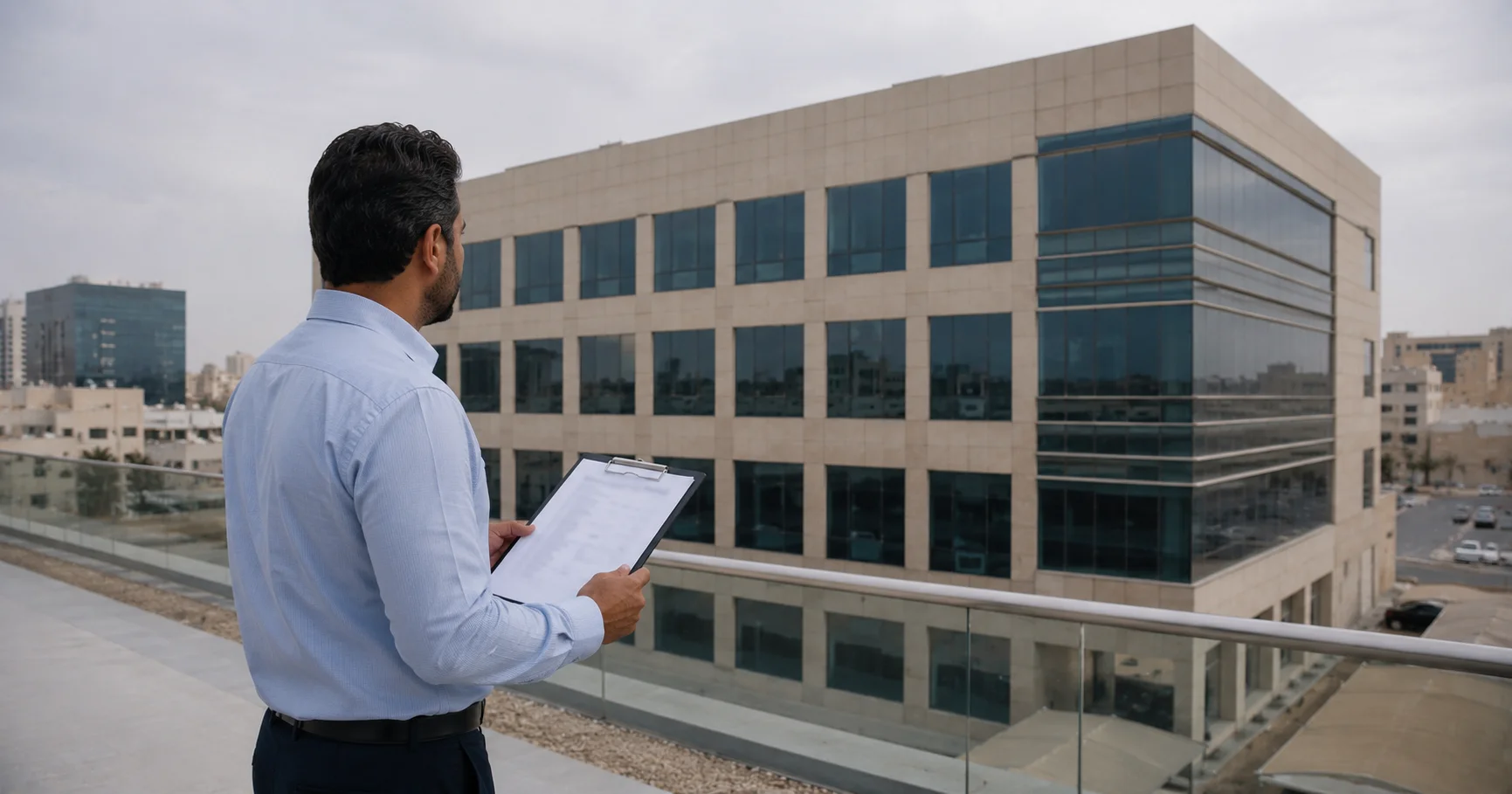
We start with a survey per site
Every location has its own elevation, height and available space, and one method cannot be generalised across several branches without seeing them. Send us your list of Riyadh locations with photographs of the elevations and we will propose a unified schedule and scope. Site inspection and quotation are free.