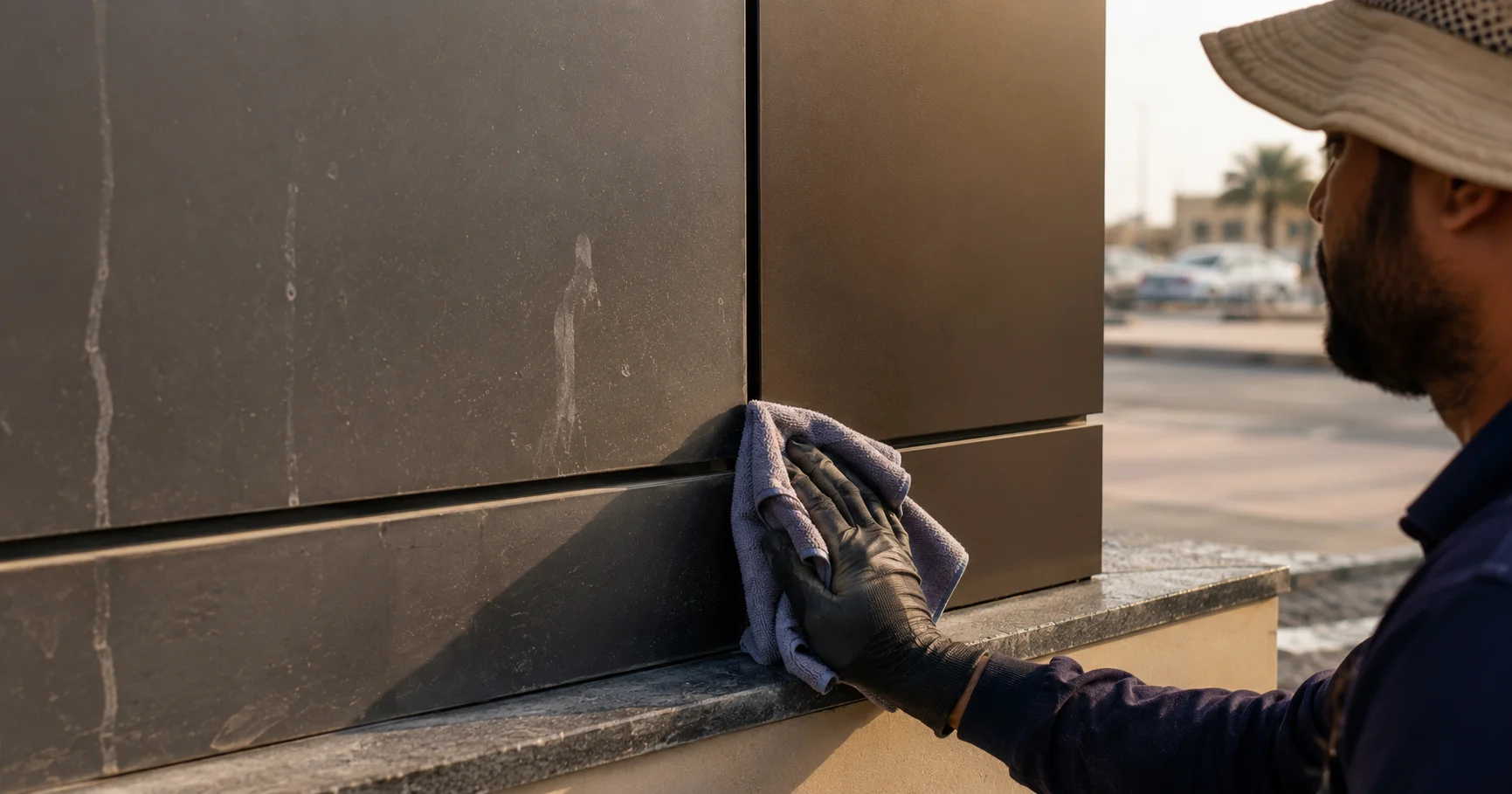
Here, damage is not fixed by cleaning again
On most facade types, cleaning badly means an unsatisfactory result that a second visit corrects. Cladding is different: the mistake is permanent.
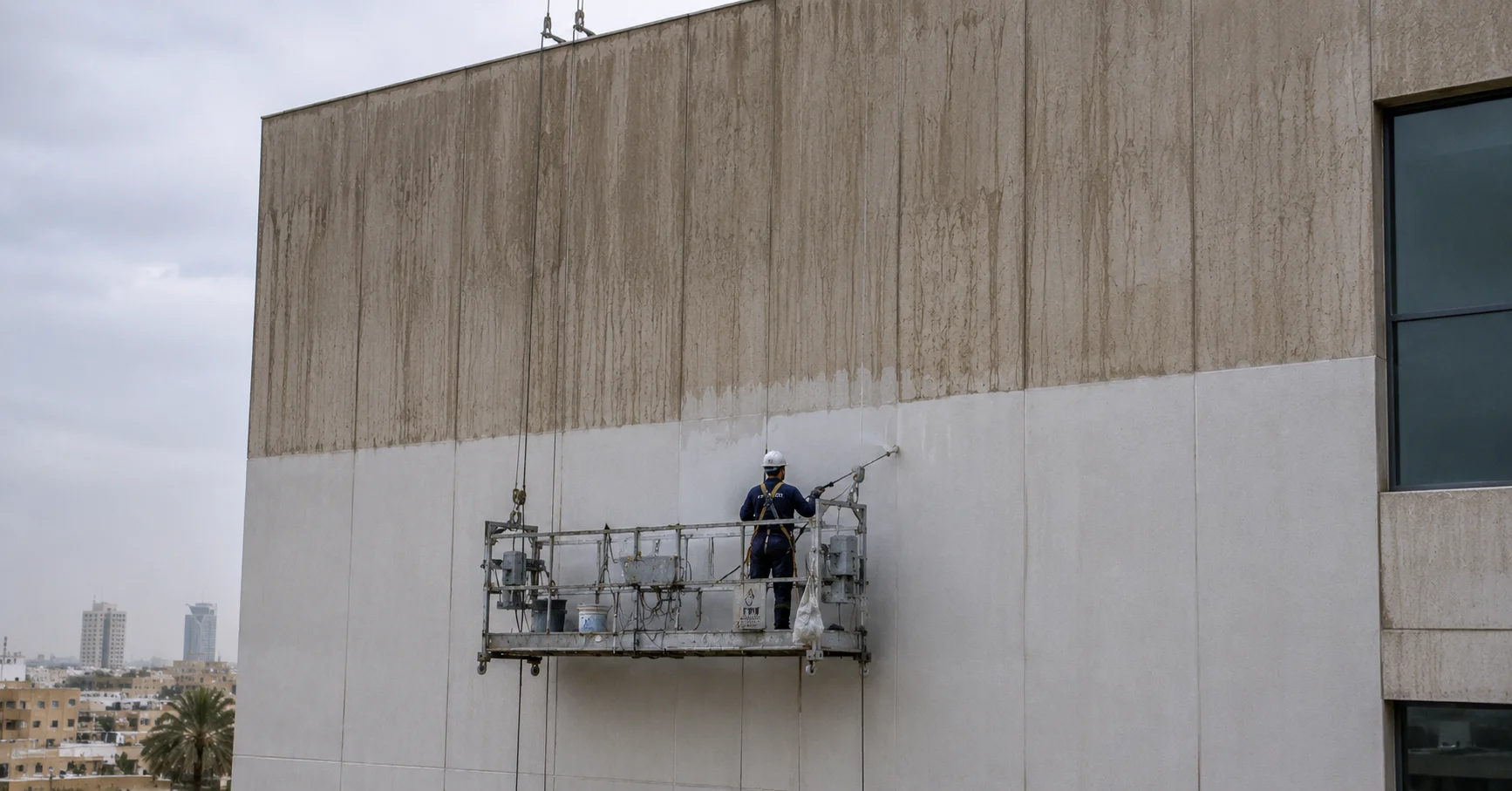
Cladding and aluminium panels carry a protective coating. That coating is what gives them their colour and finish and shields them from the weather. It is thin, and once it is scratched or dulled it does not come back with cleaning. The panel is replaced, or it stays as it is.
So the critical decision in cladding cleaning is not how hard to clean. It is which material, and at what pressure.
Three common mistakes
1. Aggressive chemicals
Strong or acidic cleaners lift soiling quickly — and attack the protective coating while doing it. The result shows up weeks later rather than on the day: colour fading, or a visible difference between the areas that were treated hard and those that were not.
We use pH-neutral materials that do not harm the coating. That is not a cosmetic preference; it is the condition for the colour surviving.
2. High pressure
High pressure is tempting because it is fast. On cladding it does two things: it can mark the surface, and — more seriously — it drives water into the joints between panels.
Those joints are not a visual detail. They are part of the weatherproofing. Forcing water behind them can carry it past the facade itself.
We use controlled pressure that does not penetrate the joints.
3. Abrasive tooling
A coarse pad or a metal blade removes the stain and leaves a scratch where it was. On a finished surface, the scratch is more visible than the mark it replaced.
Joints and silicone: the part that gets skipped
When you look at a soiled cladding facade from the street, what you are usually seeing is not the panels. It is the dark lines between them.
Joints and silicone trap dust more than flat faces do, because rain partially washes a flat surface while a joint holds what lands in it. Cleaning the panels without the joints therefore leaves a facade that still reads as dirty even though the surface is clean.
We clean the joints and the silicone between panels as part of the work, not as an extra.
Surface oxidation on aluminium
Over time and exposure, aluminium can develop surface oxidation: dull patches or a light grey film.
This is a different condition from ordinary soiling and needs specific treatment rather than harder washing. Washing harder will not remove it, and it increases the risk of damaging whatever protective coating remains.
An example from completed work
At Al-Mousi Submersible Pumps in Riyadh, the building sits on a main road, which made dust accumulate on the cladding faster. Add the building's height and the fact that the facility kept operating throughout the work.
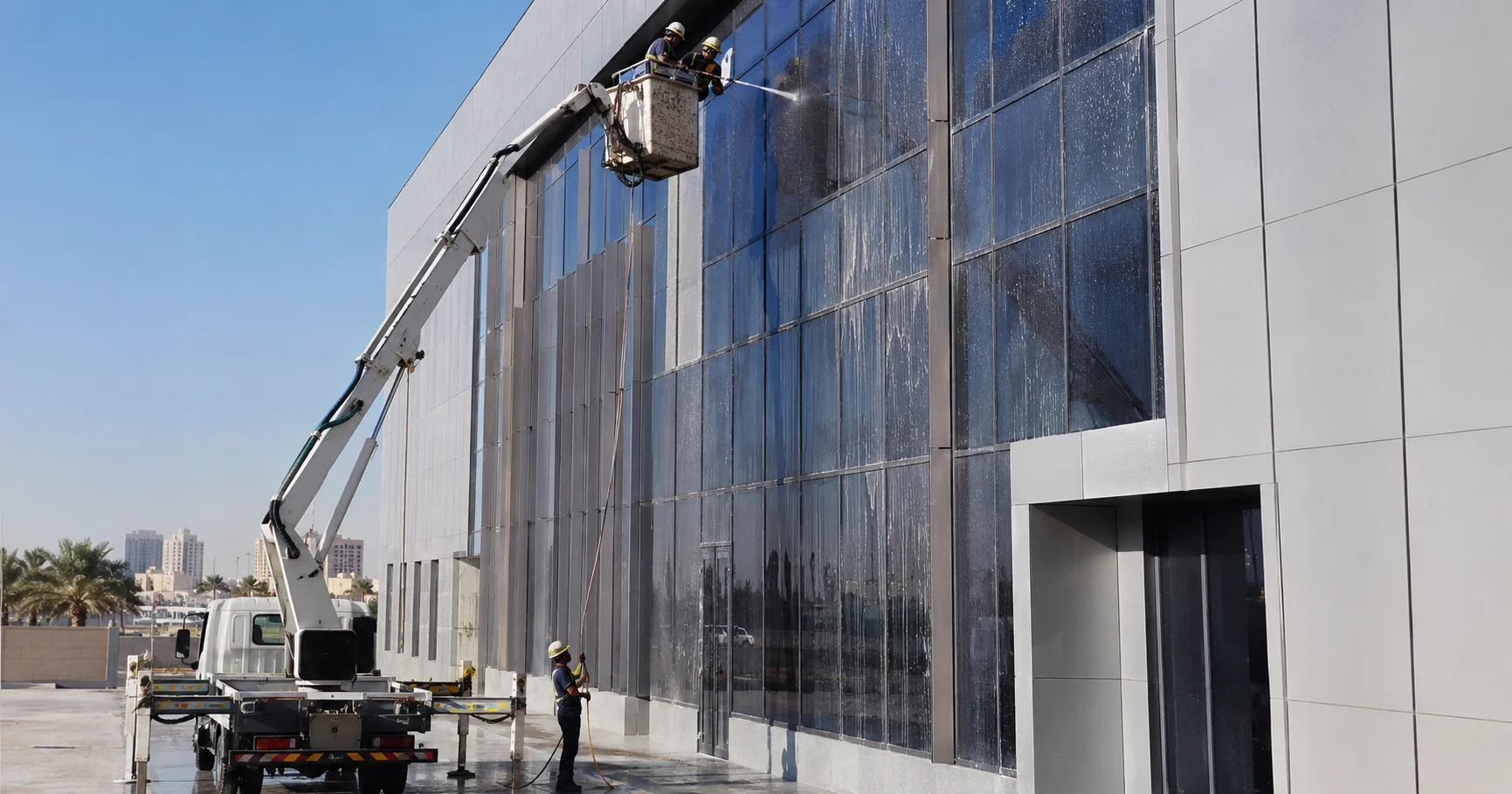
The job used a vehicle-mounted lift for safe access across the full facade height, with materials safe for the cladding coating, and the work was scheduled before the facility's operating hours began. It covered the full facade and the exterior signage, and the cladding's shine was restored.
The point is not the scale of it but the order of decisions: material first, then access, then timing.
Can cladding and glass be cleaned in one visit?
Yes — but with different materials and tooling for each surface. That is what separates correct work from quick work: the same visit, the same crew, and a different treatment per surface.
At Qut Al-Bahr, the facade combined cladding, glass and shop signage. The same cleaning method was applied with different tools and materials per surface, using materials safe for both the cladding and the glass.
How to tell whether a contractor knows this
Ask three questions before signing:
1 - What material will be used on the cladding? "A strong cleaner" is a warning.
2 - Will the joints be cleaned? If they are not in scope, the facade will still look dirty afterwards.
3 - How will pressure be handled near the joints? Anyone who does not mention the joints has not considered them.
Tell soiling and damage apart before requesting a clean
Not everything visible on a cladding elevation is soiling. Making that distinction saves money and time, and avoids commissioning a treatment that cannot work.
Soiling sits on top of the surface: dust, rain tracking, organic staining. It lifts with the right material and method, and the elevation returns to what it was.
Damage is a change in the surface itself: scratching, colour fade, advanced oxidation. Cleaning does not address it, because it is not on the surface — it is in it.
A simple test: clean a small area in an inconspicuous corner. If it returns to the colour of the rest of the elevation, the problem is soiling. If it stays different once cleaned and dry, the problem is the surface.
A contractor promising to remove fade by cleaning is describing a result that will not happen. An honest one tells you that this particular area will not return to what it was, and explains what can genuinely be improved.
Joints: why they should not be washed harder
Joints and silicone trap dust, which tempts people into treating them more aggressively than the panels. That is a mistake.
A joint is not a hard surface. It is a flexible material performing a weatherproofing function. Direct high pressure can displace it or separate it from the panel edge, and the result is not a clean joint but an open one that admits water later.
We clean joints with controlled pressure and appropriate tooling, and note their condition while working. Deteriorating joint material is something to report to the building owner, not something to fix by washing harder.
A survey before any work
We identify the surface type and its condition at survey, before choosing a material. Send us a photo of the facade and the approximate building height and we will explain what will be used and why. Site inspection and quotation are free.